
Marina Zinchenko-www.yourpersonalmatchmaker.com
How to Protect Yourself from Scammers, Catfishing, and Dangerous Online Connections
Online dating has become a normal part of modern life. Thousands of people search the internet every day hoping to find love, meaningful conversations, or emotional support — and many truly do find their happiness.
But along with the possibility of meeting “the one,” there is another side to online dating: scams, fake identities, psychological manipulation, and organized criminal schemes.
Today, romance fraud is not the work of random troublemakers. It is a global industry that brings enormous profit to criminals and destroys the lives of trusting people.
This article will walk you through the most common schemes, real dangers, and the steps you can take to protect yourself.
1. Catfishing: When a Person Is Not Who They Claim to Be
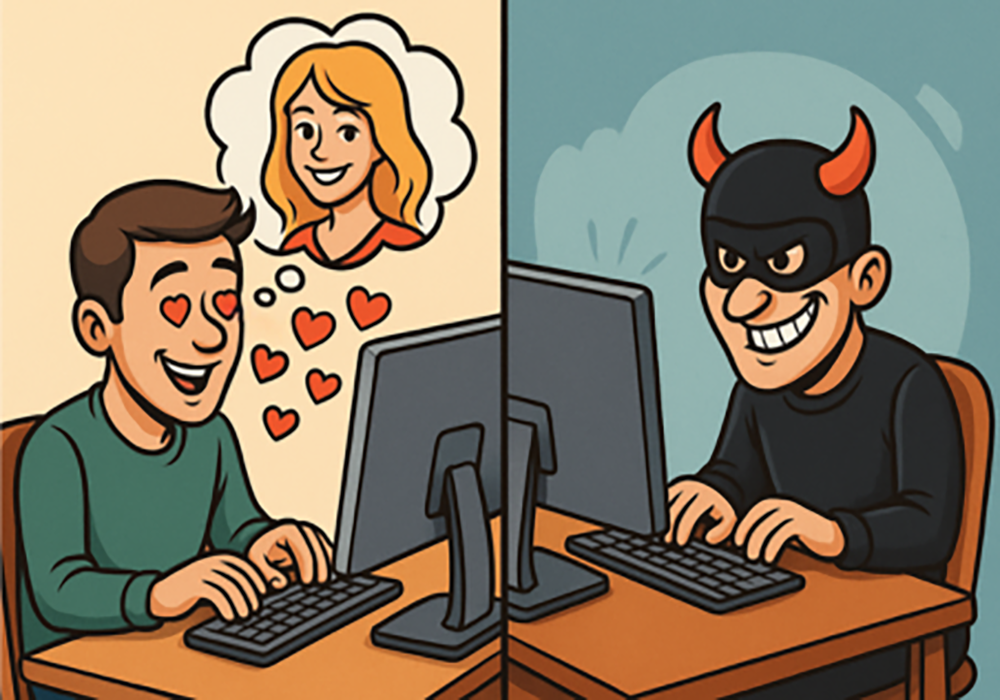
Catfishing happens when someone uses stolen photos, a fake biography, an invented age, or even a different gender to deceive others.
You may think you’re talking to an attractive woman or a respectable gentleman — but in reality it might be:
-
- a teenager creating a fake persona for fun or curiosity
-
- an organized criminal group looking to profit through deception
-
- a scammer using stolen photos and fabricated stories
-
- a person with unstable mental health, whose intentions are unpredictable
Catfishing is often the first step criminals use to establish emotional rapport and gain trust.
2. Romance Scams: When “Love” Turns Into a Financial Trap
Romance scams are the most common form of online deception.
The storyline almost always follows the same pattern:
Rapid emotional bonding–sweet messages, affection, confessions, talk about a future together, and “love at first text.”
Building trust–the person listens, supports you, and makes you feel deeply understood.
A sudden crisis–out of nowhere, they describe a dramatic problem, such as:
-
- a child who was in an accident
-
- a seriously ill parent
-
- a business collapse
-
- urgent travel expenses
-
- inability to access money or receive a salary
A request to “borrow money for a short time.”
“Just help me through this moment… I’ll pay you back… You’re the only one I can trust…”
And once the money is sent — they disappear.
Romance scammers are skilled manipulators. They study psychology and know exactly how to trigger sympathy, attachment, and guilt.
3. “Wealthy Investors” and Crypto Scams
In another common scheme, the scammer pretends not to be struggling — but to be incredibly successful.
They present themselves as a wealthy, generous man or woman who wants to share their financial wisdom.
They claim:
-
- They know how to make money instantly
-
- They can teach you
-
- Investments in crypto “double quickly”
-
- They have a “trusted” or “secret” trading platform
None of it is real.
Victims, hoping not to miss an opportunity, may invest their life savings, take out loans, or even sell property.
Eventually, the platform disappears, the money disappears — and so does the scammer.
4. Organized Scam Centers: A Multi-Billion-Dollar Industry
One of the most dangerous developments is that many scams are run not by individuals, but by large, highly organized criminal groups.
According to media reports and testimonies of people who escaped:
In some regions, entire mini-cities operate as scam centers. People from various countries are lured there with promises of high-paying jobs and then forced into digital slavery.
Who works inside these centers?
-
- operators who chat with victims
-
- models who appear on video calls to “prove” their identity
-
- psychologists who analyze victims and advise how to manipulate them
-
- writers who craft fake biographies and emotional scripts
-
- staged rooms designed to look like apartments, offices, cafés, or hotels
These are not isolated scammers — they are corporations of fraud.
What happens to the workers?
According to survivors:
-
- They are held against their will
-
- Forced to work 15–18 hours a day
-
- Have their documents confiscated
-
- Beaten for refusing to cooperate
-
- Told to pay enormous “ransom” fees
-
- Some sell organs to escape
-
- Many disappear without a trace
It is modern-day slavery built on romance scams.
5. Sextortion: Trust, Intimacy… and Blackmail
This scheme does not begin with a request for photos.
It begins with emotional closeness.
Everything feels genuine:
You receive attention, warmth, long conversations, personal stories, and emotional bonding.
You begin to trust — maybe even fall for this person.
When the connection feels strong and safe, the scammer gradually shifts the conversation to intimacy.
They may say:
-
- “You mean so much to me.”
-
- “I want us to feel even closer.”
-
- “Sharing something private will bring us together.”
And eventually you are gently — or persistently — asked to send intimate photos or videos, framed as a sign of sincerity, affection, or emotional closeness. Then everything changes.
A few days later (or even hours later), the blackmail begins:
-
- threats to send the images to your family
-
- to expose them to your followers or co-workers
-
- to publish them on the dark web or adult sites
-
- demands for money
This can happen even after a short conversation if the scammer senses emotional vulnerability.
6. Dangerous or Unstable Individuals
The internet hides identity. You cannot know who is really behind the screen.
Potential risks include:
-
- obsessive behavior
-
- stalking
-
- aggression
-
- threats
-
- mental instability
-
- unpredictable or dangerous actions
Some online connections end tragically when people ignore the warning signs.
How to Protect Yourself ? Advice from a Professional Matchmaker
Never send money to someone you met online
Not to “loved ones,” “friends,” or anyone claiming an emergency
Never send intimate photos or videos
No matter how close you feel
The internet does not forgive misplaced trust
Pay attention to behavioral red flags
-
- avoids video calls
-
- contradicts themselves
-
- rushes emotional closeness
-
- constantly complains about dramatic problems
-
- creates a sense of urgency
Use only verified and safe dating sources
Places where identities are checked and verified — not hidden behind stolen photos.
Why It’s Safer to Date Through a Professional
I created Your Personal Matchmaker to help people meet in a truly safe, respectful, and authentic environment.
My service provides:
-
- real, fully verified individuals
-
- a controlled, protected setting
-
- matches without fear, risk, or deception
-
- clear boundaries and respect
-
- support at every step of the process
Every candidate is carefully screened and interviewed.
Online Dating Can Lead to Love — but Only with Awareness
The internet can bring wonderful relationships, but only if you understand how modern scams work and protect yourself wisely.
Please stay cautious and take care of your safety.
And if you want to date with confidence and peace of mind — trust professionals.
You deserve real, honest, genuine love.